

When purchasing a garment, we are often guided by its color, style, or fit.
Yet there is one small but essential detail that reveals far more than we might imagine: the composition label.
Knowing how to read a label means understanding:
- the true quality of a garment
- how it will wear over time
- how it should be washed
- how breathable it will be
- and, above all, whether we are choosing a natural or synthetic material
In the world of knitwear, understanding yarns means making more conscious purchases, prioritizing comfort, durability, and well-being.
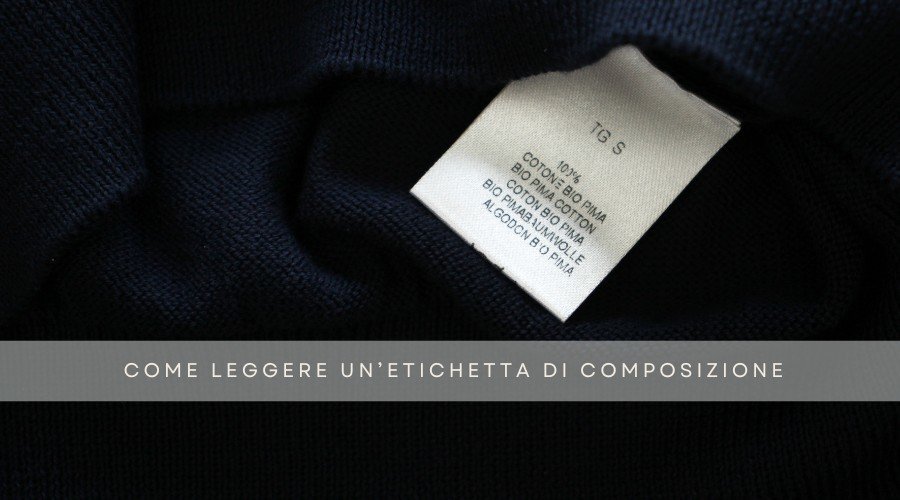
The textile label is the true identity card of a garment.
Here we find essential information about the materials used and their percentages.
A sweater that appears similar to another may actually have a completely different composition:
- one may be made from pure merino wool
- another may contain mostly synthetic fibers
The difference becomes noticeable over time:
- in softness
- in breathability
- in durability
- in comfort against the skin
On the label, fibers are listed in descending order.
Example:
- 70% merino wool
- 30% cashmere
This means that merino wool is the main fiber of the garment, while cashmere is present in a smaller percentage.
When you find wording such as:
- 100% cashmere
- 100% extrafine merino wool
- 100% natural cotton
it means the garment is entirely made from that fiber.
Natural fibers come from elements found in nature, such as wool, cashmere, or cotton.
Among their main advantages:
- greater breathability
- comfort on the skin
- better thermoregulation
- higher perceived quality
- long-lasting durability
Among the most appreciated fibers in knitwear:
- cashmere
- merino wool
- cotton
- eco-sustainable viscose
- silk
Synthetic fibers, on the other hand, are artificial materials mainly derived from petroleum.
These include:
- polyester
- acrylic
- nylon
- polyamide
They may make garments more affordable, but they are often:
- less breathable
- less soft
- more prone to static electricity
- less durable over time
Not all blends are negative.
Some combinations are designed to improve:
- elasticity
- resistance
- fit
The real difference always lies in the quality of the fibers used and in their percentage.
A garment with a high percentage of natural fibers generally maintains better comfort and breathability.
Beyond composition, there are other details worth observing:
A high-quality natural yarn feels soft, even, and pleasant to the touch.
Well-crafted knitwear maintains its shape better over time.
Buttons, seams, and details reveal a great deal about the care taken during production.
Made in Italy production is often synonymous with artisanal attention and carefully selected materials.
Choosing garments made with natural yarns means investing in:
- well-being
- everyday comfort
- durability
- timeless elegance
Artisanal knitwear enhances carefully selected materials and refined craftsmanship, far from the logic of fast fashion and designed to accompany your wardrobe over time.
Learning how to read a composition label is a simple gesture, but it can completely change the way we shop for clothing.
Understanding materials means choosing with greater awareness, prioritizing quality, comfort, and durability.
Because behind every yarn there is a story made of research, craftsmanship, and attention to detail.